01 / The beginning
My Story
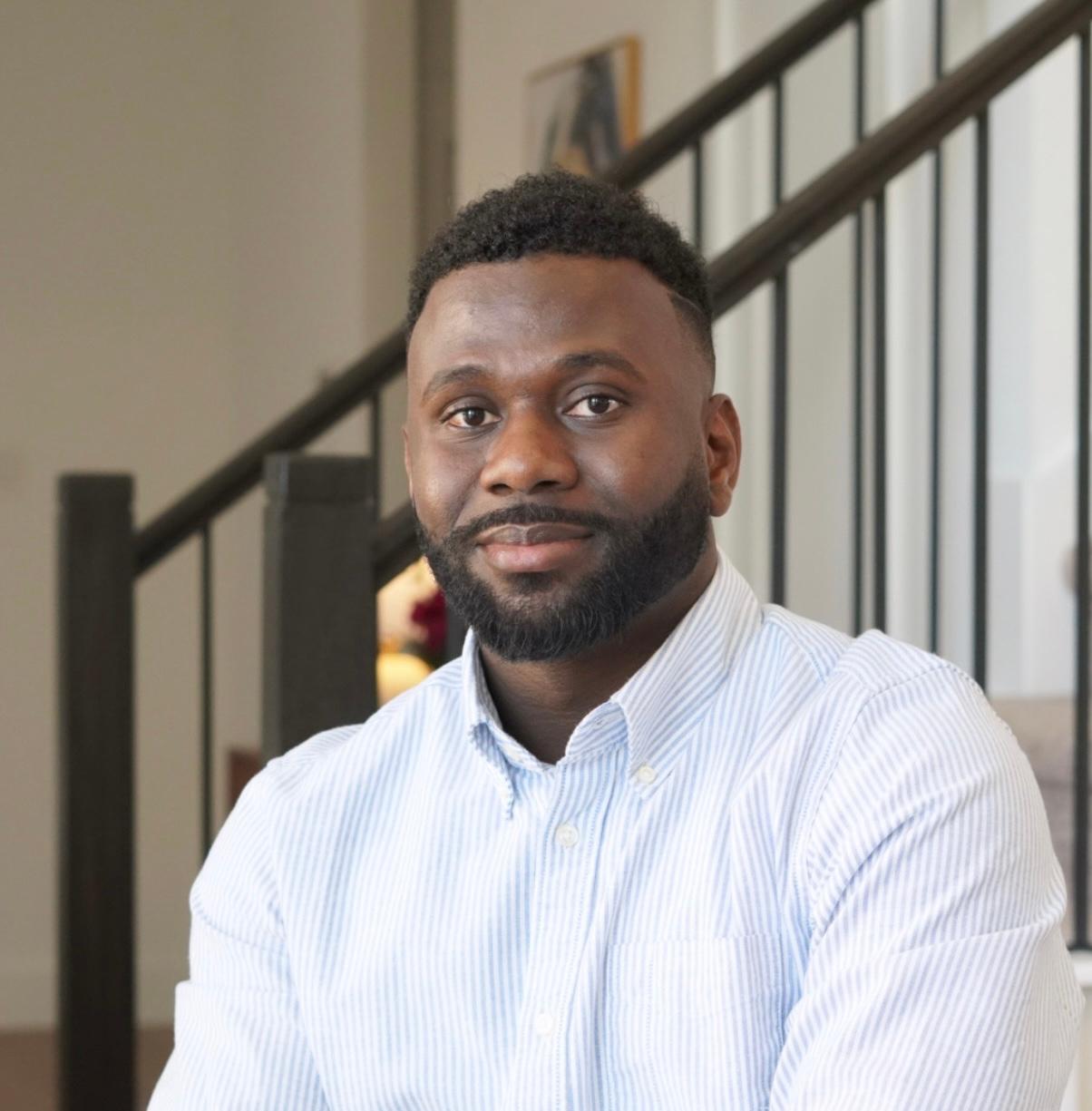
My name is Favour Ori. I am a software and security engineer and entrepreneur.
I started teaching myself how to program in 2013. I was a teenager at the time and, honestly, there wasn't some elaborate plan behind it. I became interested in computers, started learning how software worked, and kept going.
In 2016, I moved to the United States for college and studied Computer and Information Sciences at Southern Arkansas University. I was much more interested in actually doing the work than waiting until graduation to start calling myself an engineer, so I spent a lot of my time programming, working on projects, researching things I found interesting, and looking for opportunities to get better.
In 2017, I worked on web application security research with Aziztitu Murugan. We built an intentionally insecure web application, studied the vulnerabilities in it, and demonstrated ways developers could address them. We eventually presented the research at the National Collegiate Honors Council's annual conference in Atlanta.
Around the same period, I taught more than 100 high school students the basics of programming at Southern Arkansas University. I was also starting to speak publicly about technology and entrepreneurship, including at the Young CEOs Business Forum in Atlanta and later at 1 Million Cups in Tulsa.
A lot of what I was doing at the time was simply me following my curiosity. I would learn something, build something with it, and then find another problem I wanted to work on.
02 / 2018
FavCode
In 2018, I started FavCode54.
I had taught myself how to program, and I knew firsthand how much harder that process was without access to experienced engineers or people who could point you in the right direction. I also knew there were thousands of young Africans trying to get into technology who were dealing with exactly that problem.
FavCode started as an attempt to do something about it.
We provided free software development training and connected people interested in technology with engineers and mentors around the world. Our mentors included people who had studied at universities such as Harvard, Yale and Princeton and engineers who worked at companies including Google, Facebook, Apple and IBM.
IBM Canada's Developer Skills Network became a partner and provided learning infrastructure that helped us expand the program.
Eventually, more than 11,000 Africans participated in FavCode programs.
That was pretty incredible to watch because it started with a much smaller idea. I wanted to help people learn how to code, and somehow that turned into thousands of people participating in something I had started.
The work also led to an opportunity I hadn't expected.
In 2018, I was selected as one of three Outstanding Youth Delegates from roughly 3,000 applicants to the Youth Assembly. I went to New York and spoke about FavCode, technology education and the potential of African technology talent.
I was still in my early twenties, and FavCode was probably the first time I really understood how far something could travel once you put it into the world.
03 / 2019 – 2020
Building My First Products
By 2019, I was spending a lot of my time between professional engineering work and building products of my own.
One of those products came from my experience trying to find educational opportunities.
When I was looking for universities and opportunities to study abroad, the information was everywhere. Universities were on one website, scholarships somewhere else, fellowships somewhere else, and you could spend hours searching without knowing whether you had found everything available to you.
I thought there should be a better way to do that, so I built College Situation.
The platform brought together universities, scholarships, fellowships and other educational opportunities so students could find them in one place.
I launched College Situation publicly in early 2020. Not long after launch, ABiT Network acquired it for ₦22 million, approximately $60,000 at the time. I retained a small ownership position and subsequently took on a broader product and technology role with ABiT.
It was my first meaningful acquisition as a founder and another reminder that the things I was building could become real businesses.
I didn't think of myself as someone following a specific startup playbook. I just kept finding problems that interested me and trying to build solutions for them. Some ideas went nowhere. Some found users. A few became much bigger than I originally expected.
The more I built, though, the more I started understanding that writing software and building a company were completely different things.
I was naturally comfortable moving very quickly. I could see a problem, start building, ship something and change direction without spending months debating whether an idea was perfect.
That worked incredibly well in some situations. In others, especially as teams became larger, I learned that an organization couldn't always move at the same speed as the person who started it.
I had to get better at delegating, communicating decisions, building systems around myself and giving other people enough context to do their best work.
Those lessons became much more important with what I built next.
04 / 2021 – 2024
Payday
In 2021, I started Payday.
The idea came from a problem I understood personally. Africans were increasingly working for companies and clients around the world, but the financial infrastructure available to them had not caught up. Getting paid internationally was difficult, holding foreign currencies was difficult, and making global payments came with another set of problems.
We thought we could build something better.
Payday initially allowed customers across African markets to send and receive money internationally. Over time, we expanded the product to include virtual cards, foreign currency accounts and other global financial services.
The response was much bigger than I expected.
Within months of launching, we raised our first institutional capital and were accepted into Techstars Toronto. Payday became the first Rwandan startup accepted into the program.
Six months after launch, we had grown to a team of 15, had more than 17,000 users, processed more than 56,000 transactions and raised more than $2 million.
By early 2023, Payday had grown to more than 300,000 users and was processing approximately 40,000 transactions every day and more than $25 million per month.
We also became an official payment partner for SpaceX's Starlink in markets including Nigeria and Rwanda.
That was a significant moment for us. We had started Payday to make it easier for Africans to participate in the global financial system, and now the infrastructure we had built was helping customers pay for services from one of the world's most recognizable technology companies.
In 2023, we raised another $3 million seed round led by Moniepoint, with participation from Techstars, DFS Lab's Stellar Africa Fund, Ingressive Capital and several angel investors.
When the round was announced, Moniepoint CEO Tosin Eniolorunda described what attracted them to Payday as my "drive, technical depth and desire to execute."
I've always liked that description because it captures a lot of how I approach building.
Payday continued growing from there. Over its life, the platform eventually served more than one million users, and at its peak we were processing approximately $60 million in transactions per month.
Building the company was much more complicated than those numbers suggest.
We operated financial infrastructure across multiple markets and dealt with banks, payment processors, regulators, fraud, compliance, customer support, engineering, infrastructure and everything else that came with being responsible for people's money.
There were periods when we executed extremely well and periods when things were genuinely difficult.
At the same time, I was learning how to transition from being the founder who could jump into almost anything to being responsible for an organization that needed to operate without me being involved in every decision.
Looking back, there are things I would have done differently. I would have delegated earlier, built parts of the leadership organization sooner and communicated certain decisions differently. I also would have been more conscious of giving the organization enough time to absorb change.
I don't think acknowledging that takes anything away from what we accomplished.
We built financial infrastructure that hundreds of thousands of people depended on. We raised millions of dollars from institutional investors, built a team across multiple countries, processed hundreds of millions of dollars in transactions and worked with companies like Starlink while competing in an incredibly difficult fintech market.
Payday was eventually acquired in 2024.
It remains one of the most important things I have built and one of the experiences that taught me the most about building companies.
05 / Fall 2022
Nasdaq
During the Payday years, I was also selected for the Nasdaq Entrepreneurial Center's Milestone Makers program as part of its Fall 2022 cohort.
The program worked with entrepreneurs building companies connected to the United Nations Sustainable Development Goals. I spent the program working with mentors and other founders on the next stage of what I was building.
At the end of the program, I graduated in New York and was featured on the Nasdaq Tower in Times Square.
Seeing my face on the Nasdaq Tower was one of those moments I knew I would remember. I had started programming less than a decade earlier with no idea where any of it would lead, and now something I had built had taken me there.
Then it was back to work.
06 / The through line
Engineering Was Always There
One thing that sometimes gets lost in my founder story is that I never stopped being an engineer.
Before, during and after building companies, I continued working with software, infrastructure and eventually cybersecurity.
My engineering career took me through software development, cloud infrastructure, DevOps and ultimately security engineering. I became particularly interested in everything that happened between someone writing code and that code safely running in production.
That took me deeper into AWS, Azure, GCP, Kubernetes, Docker, Terraform, CI/CD systems, application security, vulnerability management and software supply chain security.
Today, much of my professional work is focused on application security, cloud security and DevSecOps, particularly the challenge of helping large engineering organizations build and deploy software quickly without treating security as something that happens after development is finished.
I have worked on engineering and security problems across large enterprise environments and continue building my technical depth alongside everything I do as an entrepreneur.
I hold professional certifications across cybersecurity and cloud engineering, including the CISSP, CCSP, Security+ and AWS Certified Solutions Architect certifications.
More importantly to me, I still actually enjoy doing the work.
I still write code. I still spend an unreasonable amount of time reading documentation, trying new technologies and building prototypes because I want to know whether something can work.
I don't really see engineering and entrepreneurship as separate identities. Most of the companies and products I have built started with exactly the same instinct that got me into programming in the first place.
I found a problem that interested me and wanted to see if I could build a solution.
07 / What's next
Still Building
I'm approaching 30 now, and I still feel very early in my career.
Over the past decade, I have presented cybersecurity research, taught students how to code, built a nonprofit that reached more than 11,000 Africans, been selected as one of three Outstanding Youth Delegates from thousands of applicants, built and sold software, built a venture-backed fintech company, gone through Techstars, participated in Nasdaq Milestone Makers, raised millions of dollars, built financial infrastructure used by hundreds of thousands of people and developed a career in cybersecurity alongside all of it.
Some things worked extremely well. Some didn't.
I've made decisions I would make again tomorrow and others I wouldn't make again.
I've also become less interested in looking successful and much more interested in building things that actually work.
Raising money can help you build a company, but raising money isn't the accomplishment. Attention isn't the accomplishment either. I've had enough of both to understand that.
Building something people genuinely want, making it work at scale, and building an organization capable of sustaining it are much harder.
That's the part that interests me now.
I still move quickly. I'm still ambitious. I still occasionally decide to build things that sound unreasonable when I first explain them.
The difference is that I understand much better today that building something quickly and building something that lasts are two very different challenges.
I have a lot more I want to build.